
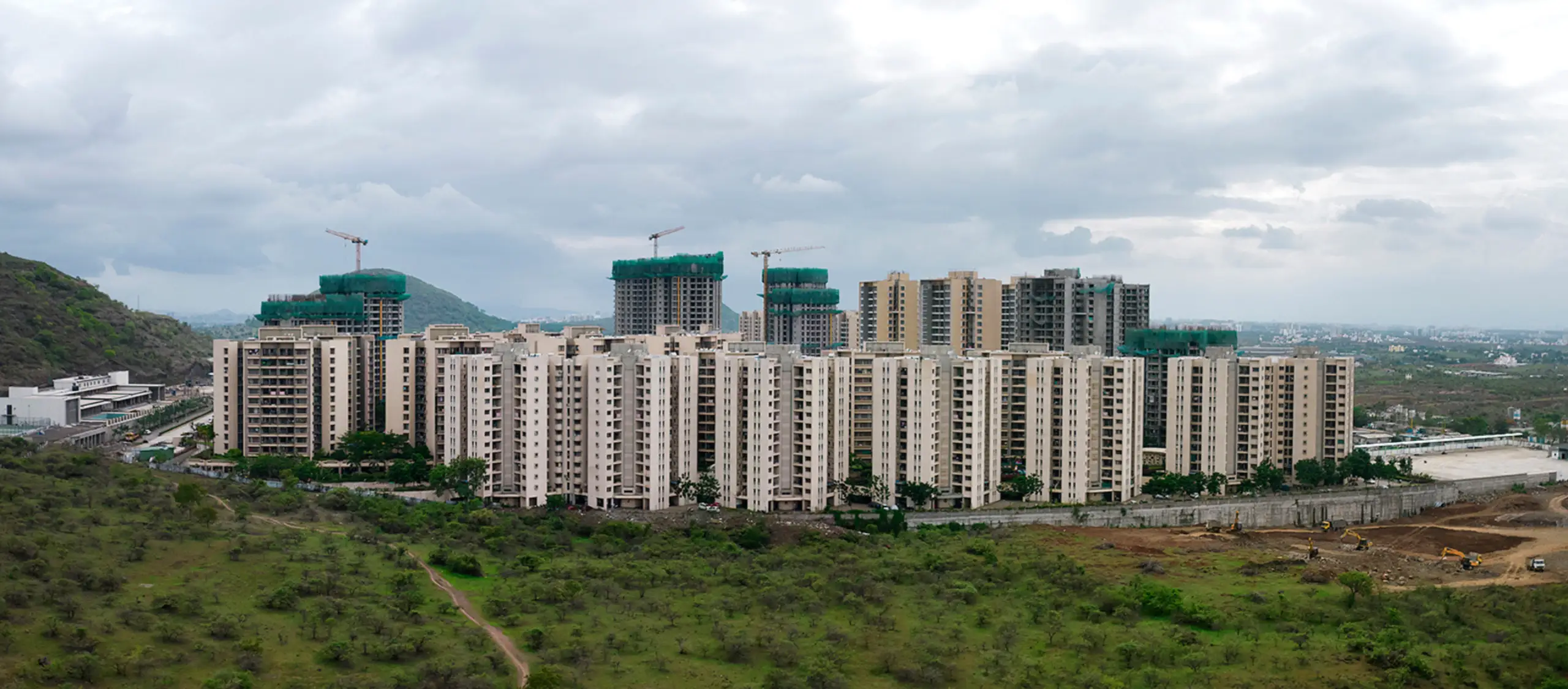
Family home buying decisions are rarely driven by a single factor. In Pune, families tend to evaluate homes through the lens of daily routines, long-term comfort, safety, accessibility, and the overall quality of everyday life. Over the past few years, Charholi has increasingly entered this evaluation set, particularly among families comparing newer residential zones with older, denser central Pune neighbourhoods.
This shift does not reflect a rejection of the city. Instead, it reflects a redefinition of what “good living” looks like at different stages of life.
How family priorities differ from individual buyer priorities
Individual buyers often optimise for immediacy. Short commutes, proximity to entertainment zones, or short-term convenience may rank high. Families, however, usually optimise for stability.
For families, predictability matters more than speed. Typical family decision filters include:
- Ease and consistency of daily commute rather than shortest distance
- Safety and walkability for children and elderly members
- Access to schools, healthcare, and daily services
- Space, ventilation, and usable open areas
Many central Pune locations struggle to meet all these conditions simultaneously due to density, traffic congestion, and ageing infrastructure.
Space, layout, and planning advantages
One of the clearest differences families notice when comparing Charholi with central Pune areas is spatial planning. Newer residential developments in Charholi tend to offer:
- Wider internal roads
- Planned residential clusters
- Clear separation between traffic movement and living spaces
These planning elements directly affect daily comfort. Children can play safely, seniors can walk comfortably, and internal movement feels less stressful.
In contrast, many older city neighbourhoods face structural constraints. Even well-established locations often lack the physical space needed for meaningful upgrades.
Daily routine simplicity
For families, routine simplicity often outweighs location prestige. Short, predictable school runs, easier access to clinics, and reduced peak-hour congestion significantly improve quality of life.
Charholi’s evolving social infrastructure supports this preference. Families increasingly choose locations where:
- Multiple daily needs can be met locally
- Errands do not require crossing the city
- Evenings and weekends feel calmer
This simplicity compounds over years, making a meaningful difference to long-term satisfaction.
Community-oriented environments
Families tend to value community more than individual buyers. Residential clusters and township formats encourage interaction, shared amenities, and informal social networks.
These environments support:
- Safer play spaces for children
- Informal support systems among neighbours
- A stronger sense of belonging
Such qualities are difficult to replicate in fragmented, high-density city neighbourhoods.
Long-term suitability over short-term convenience
For families planning to stay in a home for a decade or more, long-term suitability matters more than short-term trade-offs. Charholi’s appeal lies in offering a forward-looking environment rather than relying on legacy advantages.
This is why many families now see Charholi not as a compromise, but as a practical upgrade aligned with their life stage.
