Blog

Your blog category

Blog

What Does “Carnival” Mean in Real Estate Events? 

The word “carnival” is traditionally associated with celebration, energy, and people coming together for a shared experience. In recent years, this word has taken on a more specific role within the real estate sector as well. Buyers today increasingly encounter terms such as property carnival, home buying carnival, or real estate carnival events, particularly during certain times of the year.  To make sense of this shift, it helps to understand what “carnival” actually means in a real estate context and why this format has gained acceptance among both developers and homebuyers.  The real meaning of a carnival in real estate  In real estate, a carnival refers to a time-bound, event-led home buying format where purchasing a home is presented as a guided experience rather than a purely transactional activity. Instead of isolated site visits or routine discussions, buyers are invited into a planned environment that brings together homes, information, financial guidance, and people within a clearly defined window.  The carnival meaning in real estate is not about noise or spectacle. It is about structure and accessibility. A fixed event period allows buyers to plan their visit with intent, while a consolidated setup makes it easier to explore multiple homes or configurations in one place. This reduces fragmentation and helps buyers form a clearer picture before moving ahead.  At its core, a real estate carnival turns home buying into a shared, supported journey rather than an isolated decision. This clarity of structure also explains why the home buying carnival format has resonated strongly with buyers in recent years.  Why the home buying carnival format works  Buying a home involves emotional, financial, and practical considerations. For many buyers, especially first-time buyers, the process can feel complex and intimidating. The home buying carnival format emerged as a way to reduce this friction.  By framing home buying as an event, developers create an environment where buyers feel more comfortable entering the conversation. The presence of other families, on-ground teams, and clearly defined touchpoints builds reassurance. Discussions tend to unfold more naturally, without the formality that often surrounds conventional property interactions.  A home buying carnival does not replace due diligence. Instead, it creates a setting where due diligence can begin with clarity rather than confusion. Buyers can ask questions, understand processes, and evaluate options without feeling rushed.  What usually happens at a real estate carnival  Most real estate carnivals follow a structured yet flexible flow. Buyers can explore available homes, understand layouts, and discuss lifestyle considerations in a single visit. Support related to financing, eligibility, or documentation is typically available on-site to help simplify the next steps.  The emphasis is on efficiency with comfort. Instead of spreading information across multiple meetings, the carnival format brings everything together. This is where the carnival meaning in real estate becomes practical and relevant for serious buyers who want clarity before commitment.  How carnivals influence buyer behaviour  Real estate carnivals tend to encourage participation. Buyers who might otherwise delay a visit often feel more at ease attending an event than scheduling a formal appointment. The shared environment lowers hesitation and supports collective decision-making within families.  Seeing other buyers explore options also builds confidence. It reinforces that home buying is a common journey rather than an intimidating or solitary one. Over time, this behavioural shift has made the home buying carnival a repeatable and trusted format rather than a novelty.  Casa Carnival and the evolution of the concept  A clear example of how the carnival meaning in real estate has evolved is Casa Carnival by Pride World City. Introduced in 2022, Casa Carnival was positioned as a Pune’s Biggest Home Buying Festival.  Over time, it has grown into a recurring annual format:  This progression shows how a real estate carnival can evolve from an idea into a long-term institution when executed consistently.  A destination event for buyers across India  One notable aspect of Casa Carnival is its ability to attract buyers from different parts of India. Over the years, homebuyers have travelled from multiple cities and regions to explore opportunities within Pride World City during the carnival period.  This pan-India participation highlights an important aspect of the carnival meaning in real estate. A well-structured carnival is not limited to local walk-ins. It can become a destination event where buyers plan visits specifically to engage with a township, understand options in one trip, and make informed booking decisions.  Why understanding this term matters  Understanding the carnival meaning in real estate helps buyers approach these events with the right expectations. A property carnival or home buying carnival is not about impulsive decisions. It is about structured exploration within a defined timeframe.  When done thoughtfully, the carnival format reduces confusion, builds confidence, and creates a comfortable environment for families to begin meaningful conversations about home ownership. That is why this concept continues to remain relevant in an increasingly experience-driven real estate landscape.  
Blog

What Is a Property Carnival? Concept, Format, and Buyer Intent

A property carnival is a time-bound home buying event where selected residential projects, financial assistance, and on-site support are brought together in one structured setting. The format is designed to help buyers explore, compare, and evaluate homes within a focused window rather than across scattered visits.  As urban housing markets grow more complex, the property carnival model has gained relevance because it reduces friction in the buying journey. It creates a clear environment where information, guidance, and opportunity are available simultaneously.  The Concept Behind a Property Carnival  The core idea of a property carnival revolves around structured access.  Instead of visiting multiple locations over several weeks, buyers attend a single event where:  A property carnival blends real estate presentation with an event-led atmosphere. Families can participate together, ask questions directly, and evaluate options in a coordinated manner. The structure supports informed decision-making within a defined timeline.  How a Property Carnival Is Structured  A property carnival typically follows a deliberate framework that balances information, financial clarity, and timing.  1. Defined Event Window A property carnival runs for a clearly specified duration. The time-bound nature encourages buyers to prioritize evaluation within a structured timeline.  2. Curated Project Presentation Selected projects or inventories are showcased cohesively. Buyers can compare layouts, sizes, and positioning without fragmentation. The focus remains organized rather than scattered.  3. Integrated Offers and Payment Formats Offers form a central component of a property carnival. These often include flexible payment plans, phased demand schedules, EMI-linked support formats, or limited-period financial advantages aligned with the event window.  The purpose of these offers lies in enabling structured financial planning. Buyers can align cash flow considerations with purchase decisions in a transparent manner.  4. On-Site Financial and Documentation Assistance Bank representatives and advisory teams are commonly present during a property carnival. Buyers can check loan eligibility, understand approval processes, and clarify documentation requirements within the same visit.  5. Guided Site Experience Model homes, layout walkthroughs, and amenity presentations help translate plans into everyday life scenarios. Seeing physical spaces enhances spatial understanding and builds confidence.  Together, these components create a cohesive evaluation environment.  Why Buyers Attend a Property Carnival  Buyer intent at a property carnival is typically purposeful and focused.  Most visitors arrive after conducting research online. They seek validation, comparison, and financial clarity rather than initial discovery.  Three consistent motivations appear across buyer profiles:  Clarity in Comparison A property carnival enables side-by-side evaluation of configurations within one setting. Buyers can assess how different layouts serve different life stages or family structures.  Financial Alignment Through Structured Offers Offers available during a property carnival influence timing decisions. Flexible payment structures and EMI-linked formats allow buyers to assess affordability with greater precision. When these offers are explained alongside loan guidance, confidence improves.  Decision Momentum Within a Defined Window The structured timeline of a property carnival encourages buyers who already hold strong intent to move forward with greater certainty. Consolidated information reduces hesitation.  The Psychological Advantage of the Property Carnival Format  A home purchase carries emotional weight. The property carnival format acknowledges this.  Families often attend together. Conversations happen in real time. Questions receive immediate answers. This collective engagement builds shared confidence across decision-makers.  For developers, a property carnival allows them to present homes within their broader vision. Amenities, open spaces, and infrastructure are explained as part of daily living rather than as isolated features. Buyers gain insight into how lifestyle planning connects with residential design.  Casa Carnival at Pride World City  The property carnival format becomes especially cohesive when applied within an integrated township setting.  Casa Carnival at Pride World City represents a township-level Home Buying Festival hosted on-site. Instead of presenting isolated units, the event allows buyers to explore multiple residential formats within one planned ecosystem.  Visitors can understand how different configurations relate to shared infrastructure, open spaces, community amenities, and long-term planning. Site visits, financing discussions, and documentation guidance are accessible during the same event window, supporting structured and informed decision-making.  In this format, the property carnival goes beyond a transactional showcase. It reflects how homes function within a larger community design. Buyers evaluate both the residence and the environment it belongs to, which strengthens clarity before commitment.  Property Carnival vs Traditional Exhibitions  Traditional property exhibitions often present multiple unrelated developers in a single venue. While this offers variety, it can limit depth.  A focused property carnival typically centers on one developer or one township ecosystem. The narrative remains consistent. Buyers gain a deeper understanding of planning philosophy, infrastructure alignment, and lifestyle intent.  This cohesion strengthens decision quality.  The Long-Term Relevance of the Property Carnival Model  The property carnival format aligns with evolving buyer expectations. As housing options expand and financing structures grow more layered, buyers value environments that consolidate information and support.  A well-structured property carnival:  For first-time buyers, it simplifies learning. For upgraders, it sharpens comparison. For investors, it clarifies positioning within a defined development ecosystem.  In essence, a property carnival creates an organized pathway from exploration to evaluation. When executed thoughtfully, it supports both emotional comfort and rational clarity within the home buying journey. 

North Pune Real Estate in 2026: Growth Corridors, Buyer Behaviour, and Long-Term Signals That Matter
Blog

North Pune Real Estate in 2026: Growth Corridors, Buyer Behaviour, and Long-Term Signals That Matter

North Pune has entered a different phase of its real estate lifecycle. It is no longer discussed only in terms of potential, nor is it treated as a speculative edge market. In 2026, it stands as a functional, lived-in residential zone that is being evaluated seriously by end users, families, and long-horizon buyers.  This shift did not happen suddenly. It is the result of layered growth, where infrastructure planning, employment access, and residential formats have evolved together. To understand North Pune today, it is important to move beyond launch announcements and examine how the region actually functions as part of Pune’s urban system.  Why North Pune became relevant when it did  Cities like Pune do not grow evenly. They expand in directions where land availability, employment clusters, and connectivity align. North Pune benefited from this alignment later than the west or east corridors, which is why its growth curve looks different.  Earlier phases of Pune’s expansion absorbed demand into IT-heavy corridors and central zones. As those areas became denser and more expensive, buyers began evaluating regions that could offer:  North Pune met these criteria without being disconnected from the city.  Infrastructure as a confidence builder, not a promise  One of the reasons North Pune has gained buyer confidence is the visibility of infrastructure rather than reliance on announcements. Roads, junctions, access corridors, and municipal upgrades have reached a stage where daily movement is predictable.  This predictability matters more than absolute distance. Buyers today measure locations by:  North Pune performs reasonably well on these parameters, which makes it suitable for daily living rather than occasional use.  Buyer behaviour has shifted from opportunistic to intentional  The buyer mix in North Pune is no longer dominated by early-stage investors. Instead, it includes:  This change in buyer intent stabilises the market. Areas driven only by speculative demand tend to fluctuate more sharply, while end-user-driven zones mature steadily.  How to read North Pune beyond price charts  Price trends alone do not explain residential health. In North Pune, stronger indicators include:  These signals indicate whether an area is being lived in or merely traded.  The long-term residential role of North Pune  North Pune is gradually becoming a residential counterbalance to older, denser parts of the city. It offers a different value proposition: less congestion, more planning, and a slower but steadier growth trajectory.  For buyers looking beyond short cycles, this makes North Pune a structurally relevant part of Pune’s housing landscape.

Charholi in 2026: How a Peripheral Location Became a Stable Residential Micro-Market
Blog

Charholi in 2026: How a Peripheral Location Became a Stable Residential Micro-Market

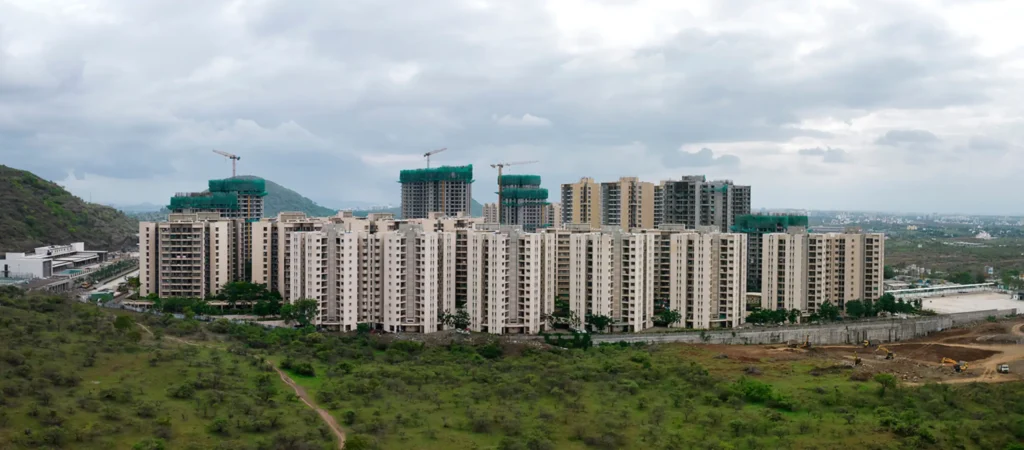
Charholi’s real estate story is not one of sudden discovery or overnight transformation. It is a story of gradual absorption into Pune’s expanding residential system. In 2026, Charholi is no longer positioned as an experimental suburb or a fringe alternative. Instead, it functions as a stable residential micro-market with its own daily rhythms, residential logic, and long-term relevance.  Understanding Charholi today requires separating perception from reality. Many buyers still evaluate it through outdated assumptions, while the on-ground reality reflects a location that has crossed multiple maturity thresholds.  From edge location to governed residential zone  Charholi’s early perception as a peripheral location was shaped by its rural past and low-density development. For years, it existed outside the mental map of most Pune homebuyers, largely because it lacked structured governance and consistent infrastructure.  The turning point came when planning norms, municipal oversight, and infrastructure upgrades began to align. Once an area enters structured urban administration, its development trajectory changes fundamentally. Growth becomes planned rather than reactive, civic services improve incrementally, and residential layouts begin to follow defined patterns instead of ad-hoc construction.  Charholi’s evolution follows this path. Its transition from a loosely defined edge zone to a governed residential area has laid the foundation for stability rather than volatility.  What residential maturity looks like  Residential maturity is often misunderstood. It does not mean full saturation or high density. Instead, it means predictability.  A mature residential micro-market typically demonstrates:  Charholi increasingly reflects these characteristics. Its growth has not been explosive, but it has been consistent, which is often a stronger indicator of long-term relevance.  What Lifestyle improvement actually means in Charholi today  Lifestyle improvement is rarely defined by landmarks or marketing narratives. It is defined by routines.  In Charholi today, Lifestyle improvement expresses itself through:  These factors reduce dependence on central Pune for routine needs, which is especially important for families and working professionals managing daily schedules.  The difference is subtle but meaningful. When everyday tasks feel manageable, residential satisfaction increases over time.  The shift from comparison to consideration  In earlier years, Charholi was often evaluated only in comparison with established city locations. Today, it is increasingly considered on its own merits.  Buyers entering Charholi in 2026 are rarely chasing novelty. Instead, they are intentionally looking for:  Charholi fits into this preference set because it offers breathing space without isolation. It allows residents to live outside dense city cores without feeling disconnected from essential urban functions.  Congestion avoidance as a lifestyle choice  One of the strongest drivers behind Charholi’s residential acceptance is congestion avoidance. As central Pune areas become increasingly crowded, daily movement takes on greater importance.  Buyers are recognising that:  Charholi benefits from this shift in thinking, especially among families and long-term residents.  The stabilising effect of township-scale development  One of the defining aspects of Charholi’s residential landscape is the presence of large, planned residential ecosystems. Township-scale development plays a stabilising role that individual standalone projects cannot replicate.  Township-led development typically:  This stabilisation effect distinguishes Charholi from fragmented suburban growth pockets where development is scattered and uneven.  Demand consistency versus demand spikes  Residential locations driven by speculation often experience sharp demand spikes followed by periods of stagnation. In contrast, Charholi’s demand pattern has been more consistent.  This consistency is supported by:  Such demand profiles usually lead to healthier residential environments and more predictable market behaviour.  How Charholi fits into North Pune’s growth logic  North Pune’s residential growth is not evenly distributed. Certain areas act as anchors that absorb population growth in a structured way. Charholi is increasingly playing this role.  Rather than functioning as a spillover zone, Charholi is evolving into a residential node that:  This positioning strengthens its long-term relevance within the broader region.  The importance of internal environments  Beyond connectivity and location, buyers are paying closer attention to internal residential environments. Charholi’s newer developments often prioritise:  These elements directly affect how homes feel over time, especially for families and older residents.  A gradual but meaningful perception shift  Charholi’s transformation has been gradual, which is precisely why it has been sustainable. Locations that change too quickly often struggle to integrate growth smoothly.  The perception shift around Charholi is now driven less by marketing and more by lived experience. Residents who move in for practical reasons often stay because daily life works.  Long-term residential suitability as the defining factor  For buyers planning to stay in a home for a decade or longer, suitability outweighs short-term convenience. Charholi’s appeal lies in its ability to support evolving life stages without forcing constant adjustment.  This long-term suitability is what separates stable residential micro-markets from temporary growth zones.  Charholi’s role going forward  As North Pune continues to mature, Charholi’s role is becoming clearer. It is no longer an alternative to the city, but an extension of it.  Its future is not defined by rapid transformation, but by steady integration. Infrastructure, occupancy, and social amenities are evolving together, which supports sustained residential relevance.  The bigger picture  Charholi’s emergence as a stable residential micro-market is not accidental. It is the result of planning alignment, demand quality, and Lifestyle improvement improvements moving in the same direction.  For buyers who value routine simplicity, planning clarity, and long-term comfort, Charholi increasingly represents a considered residential choice rather than a compromise.

Why Early-Stage Residential Investment in Charholi Attracts Long-Term Oriented Buyers
Blog

Why Early-Stage Residential Investment in Charholi Attracts Long-Term Oriented Buyers

Early-stage residential investment often triggers divided opinions. Some buyers associate it with uncertainty and delayed gratification. Others see it as an opportunity to enter a location before it reaches full maturity. In practice, the difference between risk and opportunity lies not in timing alone, but in buyer intent.  Charholi currently sits in a phase that attracts long-term oriented buyers rather than short-cycle speculators. Understanding why requires unpacking what “early-stage” truly means in a residential context and how Charholi’s growth pattern aligns with patient, use-oriented decision-making.  Rethinking the meaning of early-stage residential markets  In residential real estate, “early-stage” is often misunderstood. It does not mean undeveloped, unplanned, or disconnected. Instead, it typically describes a phase where:  Charholi fits this definition without falling into the category of speculative or loosely governed growth. Its early-stage status reflects progress in motion, not absence of fundamentals.  Why long-term buyers view early-stage differently  Long-term oriented buyers evaluate property differently from short-term investors. Their primary questions are not about immediate upside, but about usability over time.  They tend to ask:  Charholi increasingly answers these questions in ways that resonate with long-horizon buyers.  Infrastructure visibility as a confidence signal  One of the strongest indicators for long-term buyers is visible infrastructure. Announcements matter less than what can be experienced on the ground.  In Charholi, long-term buyers respond positively when they see:  This visibility reduces perceived risk, and shifts focus from speculation to Lifestyle improvement.  Pricing behaviour in early-stage residential zones  In early-stage locations, pricing typically reflects current Lifestyle improvement rather than future density. This distinction is important.  Prices in such zones are influenced by:  As residential occupancy increases and infrastructure matures, pricing behaviour often stabilises instead of moving erratically. Long-term buyers value this stability more than sharp short-term movement.  Demand quality matters more than demand speed  Fast absorption is not always healthy. Locations that grow too quickly often attract speculative demand that exits just as rapidly.  Charholi’s demand profile is different. It attracts:  This mix supports gradual, sustainable growth rather than volatile cycles.  Why speculative buyers often avoid Charholi  Interestingly, many short-term investors tend to overlook Charholi. The reasons are revealing:  For long-term buyers, these exact characteristics are strengths. Stability is often more valuable than speed when the intent is residence or sustained use.  The role of township-scale development in reducing risk  One of the key factors attracting long-term buyers to Charholi is the presence of township-scale residential ecosystems. Large, planned developments introduce predictability that smaller, fragmented projects cannot.  Township-led growth:  This reduces dependency on external development patterns and lowers long-term uncertainty.  Early-stage investment as lifestyle alignment  For many buyers, early-stage investment in Charholi is not purely financial. It is a lifestyle alignment decision.  Buyers are choosing:  These choices compound over time, leading to higher long-term satisfaction.  Charholi’s position within North Pune’s growth arc  Early-stage confidence is also influenced by regional context. Charholi is not developing in isolation. It sits within North Pune’s broader residential growth arc, which supports:  This context reassures long-term buyers that Charholi’s growth is part of a larger pattern, not an isolated experiment.  Why patience is rewarded in residential decision-making  Residential real estate rewards patience differently than commercial or speculative assets. The value of a home is realised over years of use, not just at exit.  Long-term buyers understand that:  Charholi’s current phase aligns well with this patient mindset.  Common misconceptions about early-stage investment  Some buyers hesitate because they equate early-stage with inconvenience. In reality, the inconvenience often decreases as infrastructure and occupancy grow together.  In Charholi, early-stage investment does not mean living without essentials. It means entering a location where:  This distinction is important for realistic expectation setting.  Long-horizon decision-making and usage planning  Early-stage residential investment works best when aligned with realistic usage plans. Buyers considering Charholi often plan for:  This clarity of intent reduces friction and improves decision confidence.  Why early-stage locations often age better  Many of Pune’s most established residential areas were once early-stage choices. What differentiates those that aged well from those that stagnated is planning quality and demand composition.  Charholi’s structured growth, governance clarity, and end-user demand suggest a healthier ageing trajectory.  The bigger picture  Early-stage residential investment in Charholi attracts long-term oriented buyers because it offers something increasingly rare: a balance between progress and predictability.  It allows buyers to enter a location while growth is still unfolding, without relying on speculation or hype. For those prioritising stability, Lifestyle improvement, and future readiness, Charholi represents not a gamble, but a considered long-term choice.

Pride World City and the Growing Preference for Integrated Township Living in Pune
Blog

Pride World City and the Growing Preference for Integrated Township Living in Pune

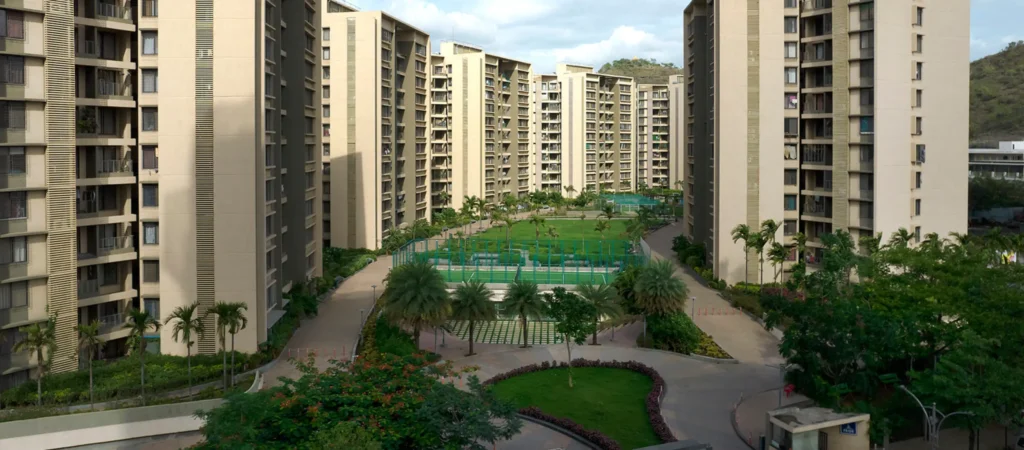
The way people evaluate homes in Pune has evolved significantly over the last decade. Buyers are no longer comparing only carpet areas, tower heights, or individual amenities. Increasingly, they are comparing living systems. This shift has accelerated the preference for integrated township living, where residential, social, and everyday needs are planned together rather than added in isolation.  Pride World City reflects this broader change in buyer thinking. It is not positioned merely as a residential project, but as a large, integrated township designed to function as a complete living environment.  Understanding why this format is gaining preference requires stepping back from individual features and looking at how daily life is structured within such communities.  The shift from homes to living environments  For a long time, home buying decisions in Pune were driven by proximity and price. Buyers accepted fragmented living environments because options were limited and the city was smaller. As Pune expanded, the shortcomings of fragmented growth became more visible.  Today’s buyers are increasingly aware that:  This awareness has shifted focus from individual homes to integrated living environments.  What integrated township living means  An integrated township is not defined only by size. It is defined by intent and coordination.  At a functional level, township living brings together:  The objective is to reduce friction between daily activities and living spaces, creating a more predictable and comfortable lifestyle.  Why this format appeals to long-term residents  Long-term residents value predictability more than novelty. Integrated townships internalise many dependencies that standalone developments outsource to the surrounding city.  This internalisation often results in:  Residents are less exposed to sudden infrastructure gaps or congestion caused by unplanned development around them.  The role of planning discipline  One of the strongest advantages of integrated township living is planning discipline. Instead of reacting to growth, townships anticipate it.  Planning discipline shows up in:  This discipline becomes more important as the population within the township grows.  Continuity within one ecosystem  Another major reason buyers prefer township living is continuity. Within an integrated ecosystem, residents can adapt their housing choices over time without changing their broader living environment.  This supports:  In a city where relocation costs—financial and emotional—are rising, this continuity carries significant value.  Pride World City as an example of ecosystem thinking  Pride World City illustrates how township planning moves beyond isolated residential delivery. Its scale allows multiple elements of daily life to coexist within one address.  Instead of depending entirely on external systems, the township integrates:  This ecosystem approach supports long-term Lifestyle improvement rather than short-term appeal.  Why distributed amenities matter  In many smaller developments, amenities are concentrated in limited areas, leading to congestion or underuse. Integrated townships distribute amenities across the site.  This distribution:  Over time, this leads to more balanced usage and stronger neighbourhood identity.  Reducing dependence on external infrastructure  One of the defining benefits of township living is reduced dependence on external infrastructure for daily needs. When schools, retail, healthcare access, and recreational spaces are planned within the township, residents spend less time navigating city traffic for routine activities.  This independence becomes increasingly valuable as surrounding areas densify, and traffic volumes rise.  Community formation as a design outcome  Community does not emerge automatically. It is shaped by how spaces are designed and used.  Integrated townships encourage community formation by:  Over time, these interactions build familiarity and trust among residents, contributing to a more settled living environment.  Alignment with Pune’s outward growth pattern  Pune’s growth is outward rather than vertical. Integrated townships align well with this pattern because they allow the city to expand without fragmenting into disconnected pockets.  Township formats:  This alignment makes township living a sustainable solution rather than a temporary trend.  The buyer mindset shifts behind township preference  The growing preference for township living reflects a deeper change in buyer priorities. Buyers are increasingly optimising for:  This mindset is particularly strong among families and buyers planning long stays.  Addressing common misconceptions about township living  Some buyers worry that township living might feel isolated or self-contained in a limiting way. In practice, well-planned townships function as extensions of the city rather than replacements.  They offer:  This balance is what differentiates mature townships from gated enclaves.  Long-term relevance of integrated townships  As cities grow more complex, integrated townships are likely to become more relevant, not less. Their ability to internalise infrastructure, support community life, and adapt over time makes them resilient to change.  For buyers planning ownership horizons of ten years or more, this resilience is a significant advantage.  The bigger picture  The growing preference for integrated township living in Pune is not driven by fashion or marketing. It is driven by lived experience.  Pride World City represents this shift by offering a residential ecosystem designed around daily life rather than isolated features. For buyers who value planning, predictability, and long-term comfort, integrated township living increasingly feels like a practical choice rather than an aspirational one.

Why More Families Are Choosing Charholi Over Central Pune Residential Locations
Blog

Why More Families Are Choosing Charholi Over Central Pune Residential Locations

Family home buying decisions are rarely driven by a single factor. In Pune, families tend to evaluate homes through the lens of daily routines, long-term comfort, safety, accessibility, and the overall quality of everyday life. Over the past few years, Charholi has increasingly entered this evaluation set, particularly among families comparing newer residential zones with older, denser central Pune neighbourhoods.  This shift does not reflect a rejection of the city. Instead, it reflects a redefinition of what “good living” looks like at different stages of life.  How family priorities differ from individual buyer priorities  Individual buyers often optimise for immediacy. Short commutes, proximity to entertainment zones, or short-term convenience may rank high. Families, however, usually optimise for stability.  For families, predictability matters more than speed. Typical family decision filters include:  Many central Pune locations struggle to meet all these conditions simultaneously due to density, traffic congestion, and ageing infrastructure.  Space, layout, and planning advantages  One of the clearest differences families notice when comparing Charholi with central Pune areas is spatial planning. Newer residential developments in Charholi tend to offer:  These planning elements directly affect daily comfort. Children can play safely, seniors can walk comfortably, and internal movement feels less stressful.  In contrast, many older city neighbourhoods face structural constraints. Even well-established locations often lack the physical space needed for meaningful upgrades.  Daily routine simplicity  For families, routine simplicity often outweighs location prestige. Short, predictable school runs, easier access to clinics, and reduced peak-hour congestion significantly improve quality of life.  Charholi’s evolving social infrastructure supports this preference. Families increasingly choose locations where:  This simplicity compounds over years, making a meaningful difference to long-term satisfaction.  Community-oriented environments  Families tend to value community more than individual buyers. Residential clusters and township formats encourage interaction, shared amenities, and informal social networks.  These environments support:  Such qualities are difficult to replicate in fragmented, high-density city neighbourhoods.  Long-term suitability over short-term convenience  For families planning to stay in a home for a decade or more, long-term suitability matters more than short-term trade-offs. Charholi’s appeal lies in offering a forward-looking environment rather than relying on legacy advantages.  This is why many families now see Charholi not as a compromise, but as a practical upgrade aligned with their life stage.

Buying a Home in Pune in 2026: A Strategic, Stage-Based Framework for Better Decisions
Blog

Buying a Home in Pune in 2026: A Strategic, Stage-Based Framework for Better Decisions

Buying a home is rarely a single decision. It is a sequence of decisions made over time, often under changing levels of clarity, confidence, and pressure. In Pune’s 2026 real estate landscape, this complexity has increased rather than reduced. Buyers are exposed to more information, more options, and more event-driven nudges than ever before.  The challenge is not lack of choice. The challenge is knowing how to choose at each stage of the journey.  A strategic, stage-based framework helps buyers separate learning from deciding, exploration from commitment, and opportunity from urgency. This approach does not eliminate complexity, but it makes it manageable.  Why most home buying confusion comes from stage mismatch  Many home buying mistakes happen not because buyers choose the wrong property, but because they apply the wrong evaluation lens at the wrong time.  Common examples include:  A stage-based framework works by aligning buyer intent with buyer action.  Understanding the three core stages of home buying  While individual journeys vary, most home buying paths can be grouped into three broad stages:  Each stage has a different purpose and requires different questions.  Treating all stages the same creates confusion and decision fatigue.  Stage One: Exploration – Learning Without Pressure  The exploration stage is about understanding, not deciding. Buyers at this stage are still forming their mental map of the city, budgets, and lifestyle priorities.  What exploration involves  At this stage, buyers should focus on:  The goal is to reduce uncertainty, not to shortlist immediately.  Common mistakes at the exploration stage  Buyers often:  This often leads to information overload rather than clarity.  The right mindset for exploration  Exploration works best when buyers:  This stage benefits from breadth rather than depth.  Stage Two: Shortlisting – Narrowing with Intent  Shortlisting begins once buyers have clarity on location logic and budget comfort. This stage is about comparison, not commitment.  What changes at the shortlisting stage  At this point, buyers usually:  The questions become more specific and practical.  How to shortlist effectively  Effective shortlisting involves:  This stage rewards depth over breadth.  The role of curated environments  Structured environments such as township visits or guided events add value here because they allow buyers to:  Shortlisting is where many buyers either gain confidence or lose momentum.  Stage Three: Booking Readiness – Deciding with Clarity  Booking readiness is not about liking a property. It is about being prepared to commit if the fit is right.  What defines booking readiness  Buyers at this stage typically have:  At this point, clarity matters more than variety.  What buyers should focus on here  Key focus areas include:  This is the stage where decision discipline matters most.  Common pitfalls at booking readiness  Buyers sometimes:  A stage-based framework helps recognise when further exploration adds diminishing value.  Why urgency should be separated from pressure  In 2026, many buying environments use time-bound framing. Urgency itself is not inherently negative. Pressure is.  Healthy urgency:  Pressure, on the other hand, thrives on ambiguity.  A strategic buyer learns to separate the two.  The role of events and platforms in different stages  Not all property events serve the same purpose.  Understanding this alignment helps buyers use events strategically rather than reactively.  Why this framework matters more in 2026  The Pune real estate market has matured. Options are plentiful, information is abundant, and buyer journeys are longer.  Without a framework:  With a framework:  The psychological advantage of structured decision-making  Home buying is as much an emotional decision as a financial one. A structured framework reduces anxiety by:  This psychological clarity often leads to better long-term satisfaction.  Using the framework as a living tool  The stage-based framework is not linear. Buyers may move back and forth briefly. What matters is recognising where you are now.  Asking the right questions for your current stage is more important than asking all questions at once.  The long-term takeaway  Buying a home in Pune in 2026 is not about speed. It is about structure.  Buyers who succeed are not those who move fastest, but those who:  A strategic, stage-based framework turns a complex journey into a manageable one, helping buyers arrive at decisions they can stand by over time.

Understanding Pride World City as a Large-Scale Residential Ecosystem, Not Just a Project
Blog

Understanding Pride World City as a Large-Scale Residential Ecosystem, Not Just a Project

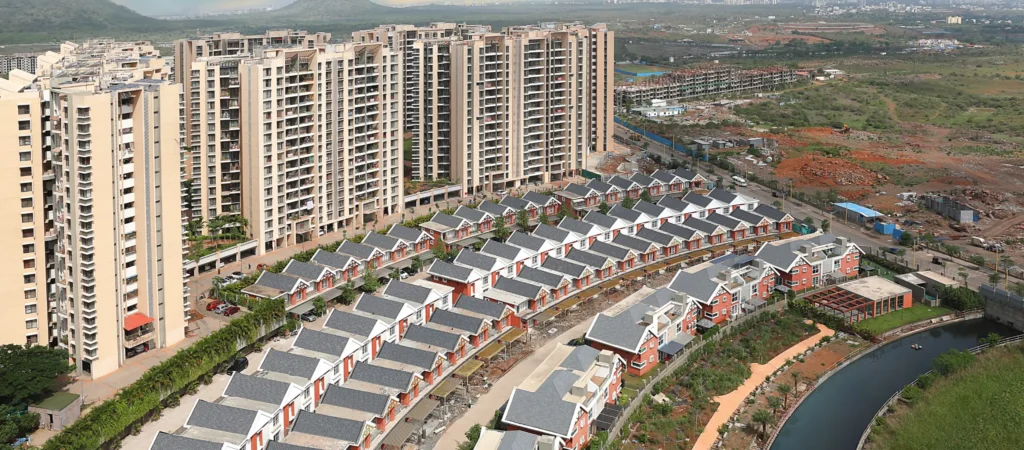
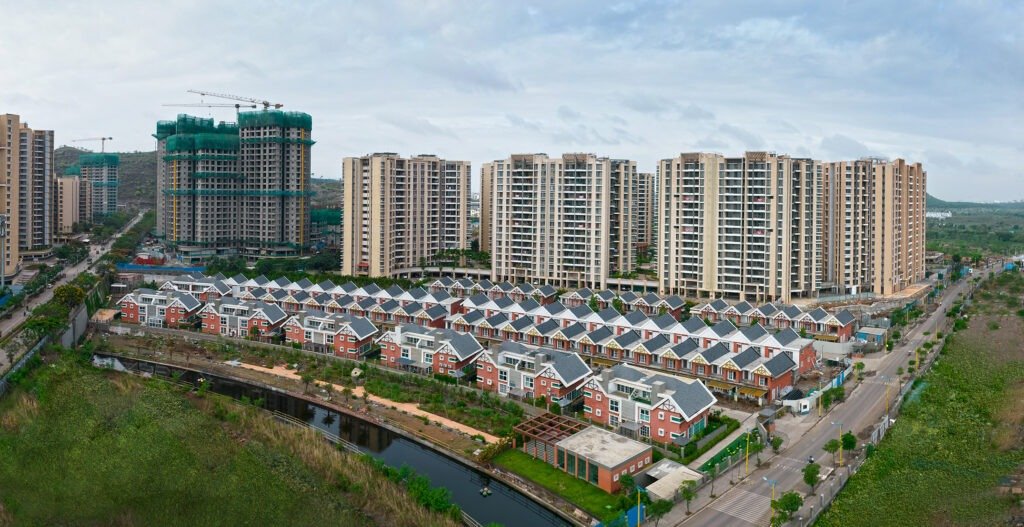
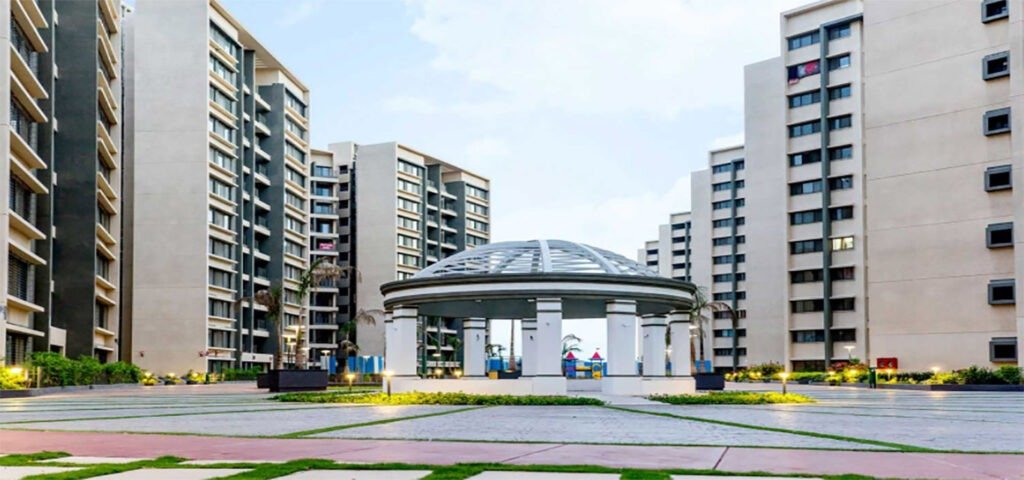
When people evaluate residential developments, they often default to thinking in terms of individual buildings or isolated projects. This approach works in dense city environments where land is scarce and growth is incremental. However, it falls short when assessing large-format developments designed to function as self-contained urban ecosystems.  Pride World City needs to be understood in this second context. It is not just a collection of residential towers. It is a large-scale residential ecosystem where planning, infrastructure, amenities, and community life are designed to evolve together.  Understanding this distinction is critical for buyers evaluating long-term Lifestyle improvement rather than short-term possession.  Why large-scale residential ecosystems function differently  A residential ecosystem operates on principles that differ significantly from standalone developments. Instead of reacting to external infrastructure, it internalises many essential systems from the outset.  Large-scale ecosystems are designed to:  This approach creates a more predictable residential environment over time.  Moving beyond the “project” mindset  When buyers think of a development as a “project,” they often focus on:  While these are important, they do not capture how daily life will function five or ten years down the line.  An ecosystem mindset shifts attention to:  Pride World City is designed with this broader lens.  Planning at multiple interconnected layers  One of the defining characteristics of Pride World City is layered planning. Instead of treating infrastructure, amenities, and residences as separate components, they are designed as interconnected systems.  At a foundational level, planning includes:  Above this, social and lifestyle layers are introduced through:  Finally, residential clusters are planned with varied configurations to accommodate different household needs.  This layered approach ensures that no single system is overloaded as the township grows.  Why scale matters in everyday living  Scale is often misunderstood as density. Scale enables distribution.  In a large residential ecosystem:  This has a direct impact on daily comfort. Residents do not compete for limited shared resources, and movement within the township feels more balanced.  The role of internal infrastructure  Internal infrastructure is one of the most underappreciated aspects of township living. In standalone developments, residents depend heavily on external roads, utilities, and civic services.  In a large ecosystem like Pride World City:  These elements reduce daily friction and improve long-term Lifestyle improvement.  Supporting multiple life stages within one address  One of the strengths of a residential ecosystem is its ability to support residents through different life stages.  Within a large township, residents can:  This continuity reduces the need for frequent relocation and helps maintain social connections over time.  Community formation as a design outcome  Community is not created through slogans. It emerges through design.  Pride World City encourages community formation by:  Over time, this leads to stronger neighbourhood identity and a more settled residential environment.  The advantage of distributed amenities  Rather than concentrating amenities in a single zone, large ecosystems distribute them across the township. This ensures that:  This distribution enhances both convenience and social cohesion.  Reducing dependency on external systems  A key advantage of large residential ecosystems is reduced dependency on external infrastructure for daily needs.  By planning schools, retail, healthcare access, and recreational spaces within the township, Pride World City minimises the need for residents to travel long distances for routine activities.  This independence becomes increasingly valuable as surrounding areas grow denser.  Long-term maintenance and management considerations  Ecosystem-scale developments allow for more structured maintenance and governance. Shared systems can be managed more efficiently when planned centrally rather than retrofitted later.  This often results in:  Over long holding periods, this consistency significantly affects residential satisfaction.  How ecosystems absorb growth without disruption  One of the challenges of growing residential areas is managing increased population without degrading quality of life. Large ecosystems are designed to absorb growth gradually.  Phased development ensures that:  This reduces the risk of sudden congestion or service strain.  Pride World City’s relevance within Pune’s growth pattern  Pune’s expansion is outward and corridor driven. Large residential ecosystems align well with this pattern because they allow growth without fragmenting the urban fabric.  Pride World City functions as a structured node within this expansion, supporting residential demand while maintaining internal balance.  Why this distinction matters to buyers  Buyers evaluating Pride World City as merely a project may miss its long-term value proposition. When understood as an ecosystem, its relevance becomes clearer.  The focus shifts from short-term comparisons to:  These factors often define satisfaction over decades rather than months.  A different lens for residential decision-making  Understanding Pride World City as a residential ecosystem encourages a more thoughtful approach to home buying. It aligns decision-making with lifestyle goals rather than immediate incentives.  This perspective is particularly relevant for families and long-term residents who value stability over novelty.  The bigger picture  Pride World City represents a shift in how residential development is conceived and delivered. It moves away from isolated projects toward integrated living environments designed to function as complete urban systems.  For buyers seeking long-term comfort, adaptability, and community, this ecosystem approach offers a fundamentally different residential experience.

How Improving Connectivity Is Reshaping Residential Demand Patterns in Charhol
Blog

How Improving Connectivity Is Reshaping Residential Demand Patterns in Charholi 

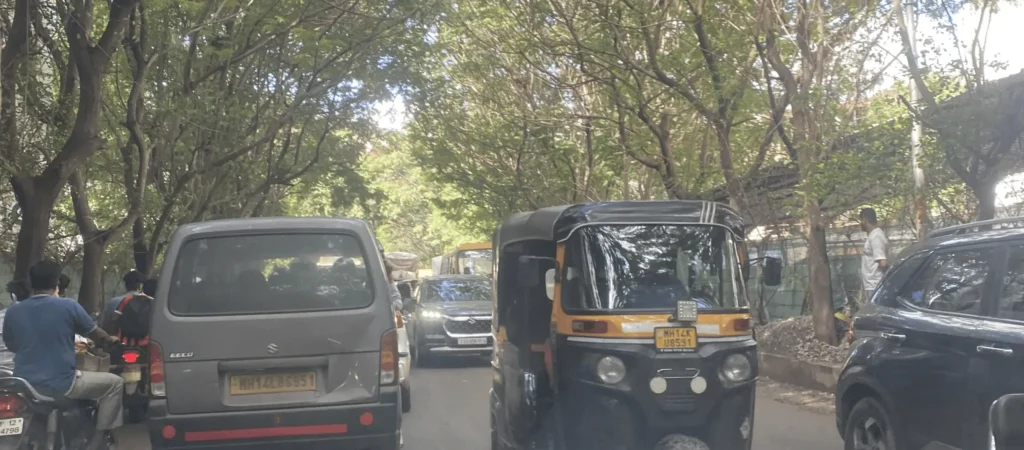
Connectivity has a compounding effect on residential demand. It does not merely determine how quickly someone can travel from one place to another. Over time, it reshapes how people perceive distance, convenience, routine stability, and even lifestyle quality. In Charholi, improving connectivity has played a central role in changing buyer sentiment and redefining its position within Pune’s residential landscape.  What makes this transformation significant is that it is not driven by a single road or corridor, but by a gradual improvement in access, route options, and everyday mobility.  Why connectivity matters more than ever in residential decision-making  Modern homebuyers rarely evaluate locations purely by physical distance. A location that is technically farther away can still feel more accessible if travel is predictable and manageable.  Today, buyers tend to assess connectivity based on:  As these factors improve, residential acceptance rises even if the location remains outside traditional city cores.  Charholi’s earlier perception as an edge location  Charholi was once viewed primarily through the lens of geography. Its distance from central Pune shaped buyer hesitation, especially among families and end users who prioritised routine stability.  In earlier phases, limited route options meant that any disruption could significantly impact daily schedules. This made Charholi less attractive for people whose routines depended on predictable movement.  The shift began when connectivity improvements started addressing not just access, but redundancy and reliability.  Connectivity beyond kilometres: redefining distance  One of the most important changes in Charholi’s residential perception is the shift from distance-based evaluation to time-based evaluation.  When buyers assess:  Charholi performs differently than it did earlier. Even if physical distance remains similar, improved route planning changes lived experience.  This shift is crucial because daily routines are shaped by time predictability, not map distance.  Impact of connectivity on daily life  Improved connectivity influences daily routines in tangible ways:  As these elements stabilise, residential comfort increases. Families respond strongly to routine predictability because it reduces cumulative daily stress.  Connectivity and residential demand quality  Improving connectivity does more than increase demand volume. It changes demand quality.  Better-connected locations tend to attract:  This contrasts with areas where demand is driven primarily by short-term speculation. In Charholi, improved connectivity has shifted interest toward users who value Lifestyle improvement over immediacy.  Why end users respond first to connectivity improvements  End users are usually the first to respond to connectivity changes because their daily experience is directly affected. When commute consistency improves, they are more willing to consider locations that were previously dismissed.  Charholi’s residential demand increasingly reflects this pattern, with more buyers evaluating it as a practical living environment rather than a future bet.  Connectivity as a trigger for ecosystem growth  Improved connectivity does not operate in isolation. It often triggers parallel development in:  As access improves, service providers find it easier to operate in the area, which further improves Lifestyle improvement. This creates a reinforcing loop where connectivity and social infrastructure grow together.  Reducing dependence on single corridors  One of the challenges of emerging residential locations is over-dependence on a single access route. This creates vulnerability during peak hours or disruptions.  Charholi’s evolving road network reduces this risk by offering:  This redundancy is a key factor in long-term residential confidence.  Connectivity and perception shift among families  Families are particularly sensitive to connectivity-related stress. Long, unpredictable commutes affect not just work schedules, but school timings, healthcare access, and social life.  As connectivity improves, families begin to reassess locations like Charholi based on:  This shift explains why Charholi has seen increased family interest over time.  Long-term integration into the city fabric  As connectivity improves, Charholi transitions from being perceived as an “outer” location to becoming an integrated residential zone.  This integration is gradual, but meaningful. Over time, the distinction between core and peripheral areas becomes less relevant when daily movement feels manageable.  Charholi’s residential relevance increasingly comes from how well it fits into everyday city life rather than where it sits on the map.  Connectivity as a stabilising factor in residential markets  Locations with improving connectivity tend to show more stable residential behaviour. Predictable movement supports:  These factors contribute to long-term residential maturity rather than rapid cycles.  Looking beyond infrastructure announcements  For buyers evaluating Charholi, the most important indicator is not announcements, but lived experience.  Questions that matter include:  Positive answers to these questions signal genuine connectivity improvement.  The bigger picture  Connectivity is not just about movement. It is about how comfortably life fits together. In Charholi, improving connectivity has reshaped residential demand by making routines smoother, reducing daily friction, and supporting long-term Lifestyle improvement.  This transformation explains why Charholi is increasingly viewed not as a distant option, but as a practical residential choice within Pune’s evolving urban system.  Final takeaway  What reshapes residential demand is not distance alone, but the quality of movement. As connectivity in Charholi continues to mature, it strengthens the area’s residential relevance and supports a more stable, end-user-driven housing environment. 

Register for Casa Carnival


    This will close in 0 seconds

    Scroll to Top