
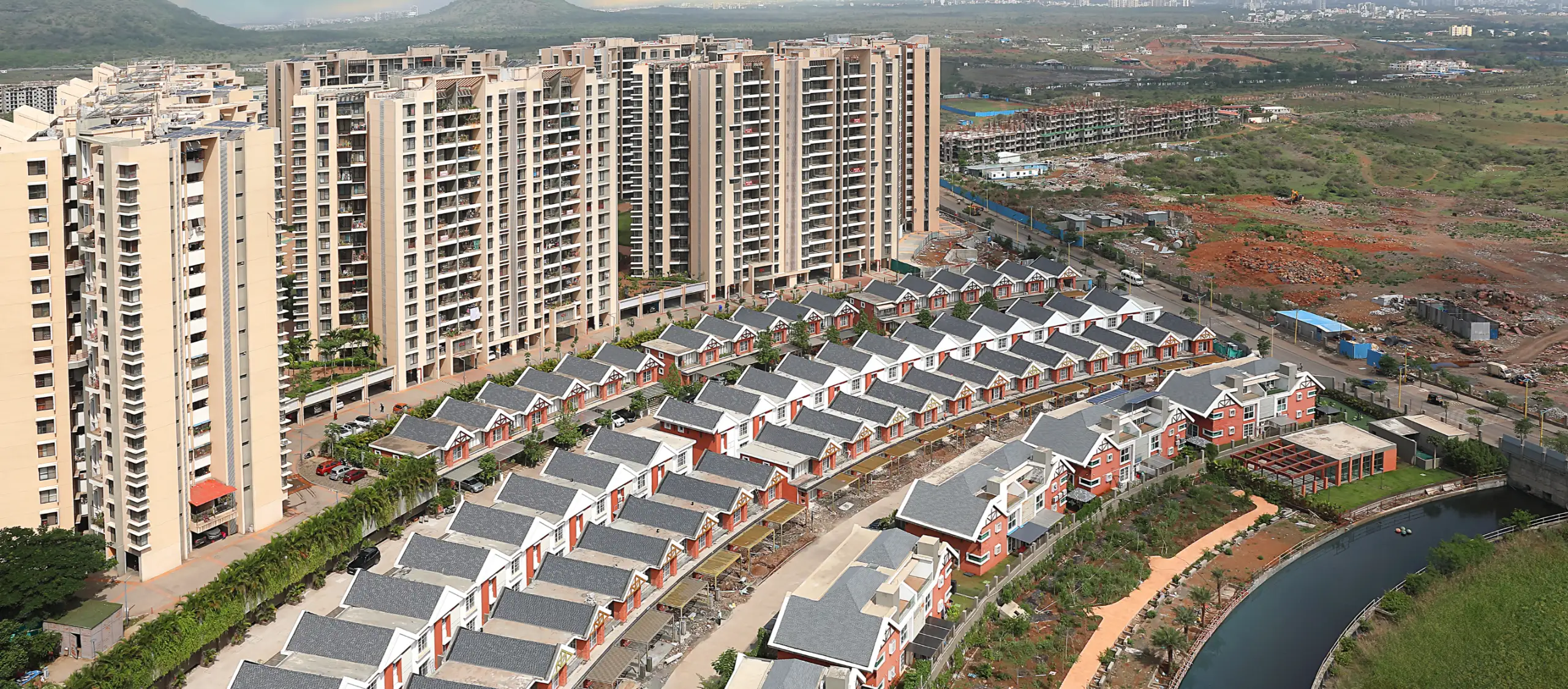
When people evaluate residential developments, they often default to thinking in terms of individual buildings or isolated projects. This approach works in dense city environments where land is scarce and growth is incremental. However, it falls short when assessing large-format developments designed to function as self-contained urban ecosystems.
Pride World City needs to be understood in this second context. It is not just a collection of residential towers. It is a large-scale residential ecosystem where planning, infrastructure, amenities, and community life are designed to evolve together.
Understanding this distinction is critical for buyers evaluating long-term Lifestyle improvement rather than short-term possession.
Why large-scale residential ecosystems function differently
A residential ecosystem operates on principles that differ significantly from standalone developments. Instead of reacting to external infrastructure, it internalises many essential systems from the outset.
Large-scale ecosystems are designed to:
- Plan infrastructure ahead of occupancy
- Distribute amenities across the site
- Support different life stages within one address
- Reduce dependency on surrounding city systems
This approach creates a more predictable residential environment over time.
Moving beyond the “project” mindset
When buyers think of a development as a “project,” they often focus on:
- Configuration and pricing
- Possession timelines
- Individual amenities
While these are important, they do not capture how daily life will function five or ten years down the line.
An ecosystem mindset shifts attention to:
- How internal movement works
- Where daily needs are met
- How communities form and sustain themselves
Pride World City is designed with this broader lens.
Planning at multiple interconnected layers
One of the defining characteristics of Pride World City is layered planning. Instead of treating infrastructure, amenities, and residences as separate components, they are designed as interconnected systems.
At a foundational level, planning includes:
- Internal road networks and circulation
- Utilities such as water, power, and drainage
- Pedestrian pathways and safety buffers
Above this, social and lifestyle layers are introduced through:
- Open green spaces
- Clubs and recreational zones
- Community gathering areas
Finally, residential clusters are planned with varied configurations to accommodate different household needs.
This layered approach ensures that no single system is overloaded as the township grows.
Why scale matters in everyday living
Scale is often misunderstood as density. Scale enables distribution.
In a large residential ecosystem:
- Amenities are spread rather than concentrated
- Open spaces remain usable rather than symbolic
- Traffic is managed internally rather than spilling outward
This has a direct impact on daily comfort. Residents do not compete for limited shared resources, and movement within the township feels more balanced.
The role of internal infrastructure
Internal infrastructure is one of the most underappreciated aspects of township living. In standalone developments, residents depend heavily on external roads, utilities, and civic services.
In a large ecosystem like Pride World City:
- Internal roads reduce reliance on arterial traffic
- Planned utility systems improve service reliability
- Pedestrian movement is separated from vehicular flow
These elements reduce daily friction and improve long-term Lifestyle improvement.
Supporting multiple life stages within one address
One of the strengths of a residential ecosystem is its ability to support residents through different life stages.
Within a large township, residents can:
- Begin with compact homes
- Upgrade as families grow
- Continue living within the same environment later in life
This continuity reduces the need for frequent relocation and helps maintain social connections over time.
Community formation as a design outcome
Community is not created through slogans. It emerges through design.
Pride World City encourages community formation by:
- Creating shared spaces that are used
- Designing amenities for regular, not occasional, interaction
- Supporting informal social networks within clusters
Over time, this leads to stronger neighbourhood identity and a more settled residential environment.
The advantage of distributed amenities
Rather than concentrating amenities in a single zone, large ecosystems distribute them across the township. This ensures that:
- No single area becomes overcrowded
- Residents have access to facilities closer to their homes
- Different clusters develop their own micro-communities
This distribution enhances both convenience and social cohesion.
Reducing dependency on external systems
A key advantage of large residential ecosystems is reduced dependency on external infrastructure for daily needs.
By planning schools, retail, healthcare access, and recreational spaces within the township, Pride World City minimises the need for residents to travel long distances for routine activities.
This independence becomes increasingly valuable as surrounding areas grow denser.
Long-term maintenance and management considerations
Ecosystem-scale developments allow for more structured maintenance and governance. Shared systems can be managed more efficiently when planned centrally rather than retrofitted later.
This often results in:
- Better upkeep of common areas
- Clearer responsibility structures
- More consistent service quality
Over long holding periods, this consistency significantly affects residential satisfaction.
How ecosystems absorb growth without disruption
One of the challenges of growing residential areas is managing increased population without degrading quality of life. Large ecosystems are designed to absorb growth gradually.
Phased development ensures that:
- Infrastructure is upgraded in advance
- Amenities scale alongside occupancy
- Residential density increases in a controlled manner
This reduces the risk of sudden congestion or service strain.
Pride World City’s relevance within Pune’s growth pattern
Pune’s expansion is outward and corridor driven. Large residential ecosystems align well with this pattern because they allow growth without fragmenting the urban fabric.
Pride World City functions as a structured node within this expansion, supporting residential demand while maintaining internal balance.
Why this distinction matters to buyers
Buyers evaluating Pride World City as merely a project may miss its long-term value proposition. When understood as an ecosystem, its relevance becomes clearer.
The focus shifts from short-term comparisons to:
- Long-term Lifestyle improvement
- Predictable daily routines
- Community continuity
- Environmental comfort
These factors often define satisfaction over decades rather than months.
A different lens for residential decision-making
Understanding Pride World City as a residential ecosystem encourages a more thoughtful approach to home buying. It aligns decision-making with lifestyle goals rather than immediate incentives.
This perspective is particularly relevant for families and long-term residents who value stability over novelty.
The bigger picture
Pride World City represents a shift in how residential development is conceived and delivered. It moves away from isolated projects toward integrated living environments designed to function as complete urban systems.
For buyers seeking long-term comfort, adaptability, and community, this ecosystem approach offers a fundamentally different residential experience.
